For the better part of a decade, the American kitchen has been dominated by a single, blinding standard: the all-white kitchen. It was safe, it was clean, and frankly, it became a little boring. We are now seeing a massive shift in the renovation market. Homeowners are no longer looking for their homes to look like sterile laboratories; they want character, depth, and sophistication. Enter the era of dark, dramatic color palettes.
Specifically, we are seeing a surge in demand for two distinct powerhouses: Navy Blue and Forest Green. These aren’t just trendy splashes of color; they are rapidly becoming the “new neutrals” of interior design. However, working with dark Ready-To-Assemble (RTA) cabinetry requires a different approach than working with standard white shaker cabinets. Lighting, hardware selection, and layout balance become critically important.
At 10 Percent Cabinetry, we believe high-end design shouldn’t require a second mortgage. In this comprehensive guide, we will break down exactly how to utilize these bold colors to transform your space, focusing on design theory, financial value, and the technical aspects of finishes.

The Rise of the Moody Kitchen Aesthetic
The concept of the “moody” kitchen is often misunderstood. It doesn’t mean dark and dungeon-like; it refers to an atmosphere that feels grounded, cozy, and curated. When you walk into a bright white kitchen, the energy is often high and frantic. A moody kitchen aesthetic, achieved through deeper tones, invites you to slow down. It turns the kitchen from a utility room into a living space.
Psychology of Color in the Kitchen
Why are Navy and Forest Green the leaders in this shift? It comes down to color psychology and our connection to nature. Blue is universally recognized as a calming color. It lowers blood pressure and reduces anxiety. In a kitchen, which is often the busiest and most chaotic room in the house, anchoring the space with deep Navy Blue creates a subconscious sense of order and calm. It feels nautical, regal, and timeless all at once.
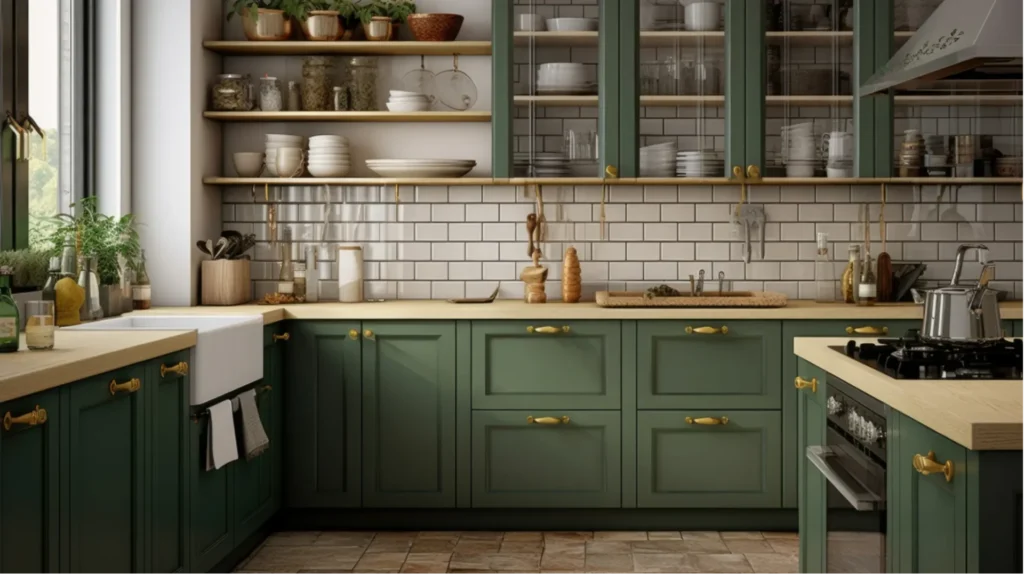
Green, on the other hand, is the color of renewal and nature. Bringing Forest Green into the kitchen connects the indoors with the outdoors. It pairs exceptionally well with natural wood elements, creating an organic, “lived-in” feel that is very popular in modern farmhouse and transitional designs. Unlike brighter lime or grass greens, a deep Forest Green acts as a neutral backdrop, allowing your food, your family, and your decor to take center stage.
Lighting: The Make or Break Factor
You cannot discuss dark cabinetry without discussing lighting. Dark surfaces absorb light rather than reflect it. If you swap white cabinets for Navy Blue without adjusting your lighting plan, your kitchen will shrink visually. To master the moody aesthetic, you need layers of light.
Ambient lighting (recessed cans) provides the base, but task lighting is where the magic happens. Under-cabinet lighting is non-negotiable with dark cabinets. It illuminates the countertop workspace and prevents the dark upper cabinets from creating shadowy voids. Furthermore, accent lighting—such as brass sconces above open shelving or a statement chandelier over an island—adds the warmth required to make the dark paint feel inviting rather than imposing.
Spatial Perception
There is a myth that you shouldn’t use dark colors in small kitchens. This is false. While white expands a space, dark colors blur the edges of a room. When painted on walls or cabinetry, deep greens and blues can actually make walls recede visually, creating a sense of infinite depth. The trick in a smaller RTA kitchen layout is balance. If you go dark on the cabinets, keep the countertops light (quartz or marble) and the backsplash reflective. This contrast creates a dynamic visual interest that a monotone white kitchen simply cannot achieve.
Design Principles for Navy Blue Kitchen Cabinets
Navy blue is arguably the most versatile color in cabinet design today. It bridges the gap between traditional elegance and modern sleekness. However, “Navy” is a broad term. In the world of RTA cabinetry, we typically look for a classic Hale Navy or a deep Indigo—tones that do not read as “purple” in bright light.
Hardware Pairings
The jewelry of the kitchen—your hardware—changes the personality of navy blue kitchen cabinets entirely. Because navy is a cool tone, it generally benefits from the warmth of contrasting metals.
- Satin Brass or Unlacquered Brass: This is the gold standard (pun intended). The yellow warmth of brass pops against the deep blue, creating a nautical or high-end luxury look. It’s classic and creates an immediate focal point.
- Polished Nickel: If you prefer a cooler, more contemporary look, polished nickel is superior to chrome. Nickel has a slight warm undertone that prevents the combination from feeling sterile, whereas chrome can look cheap against dark blue paint.
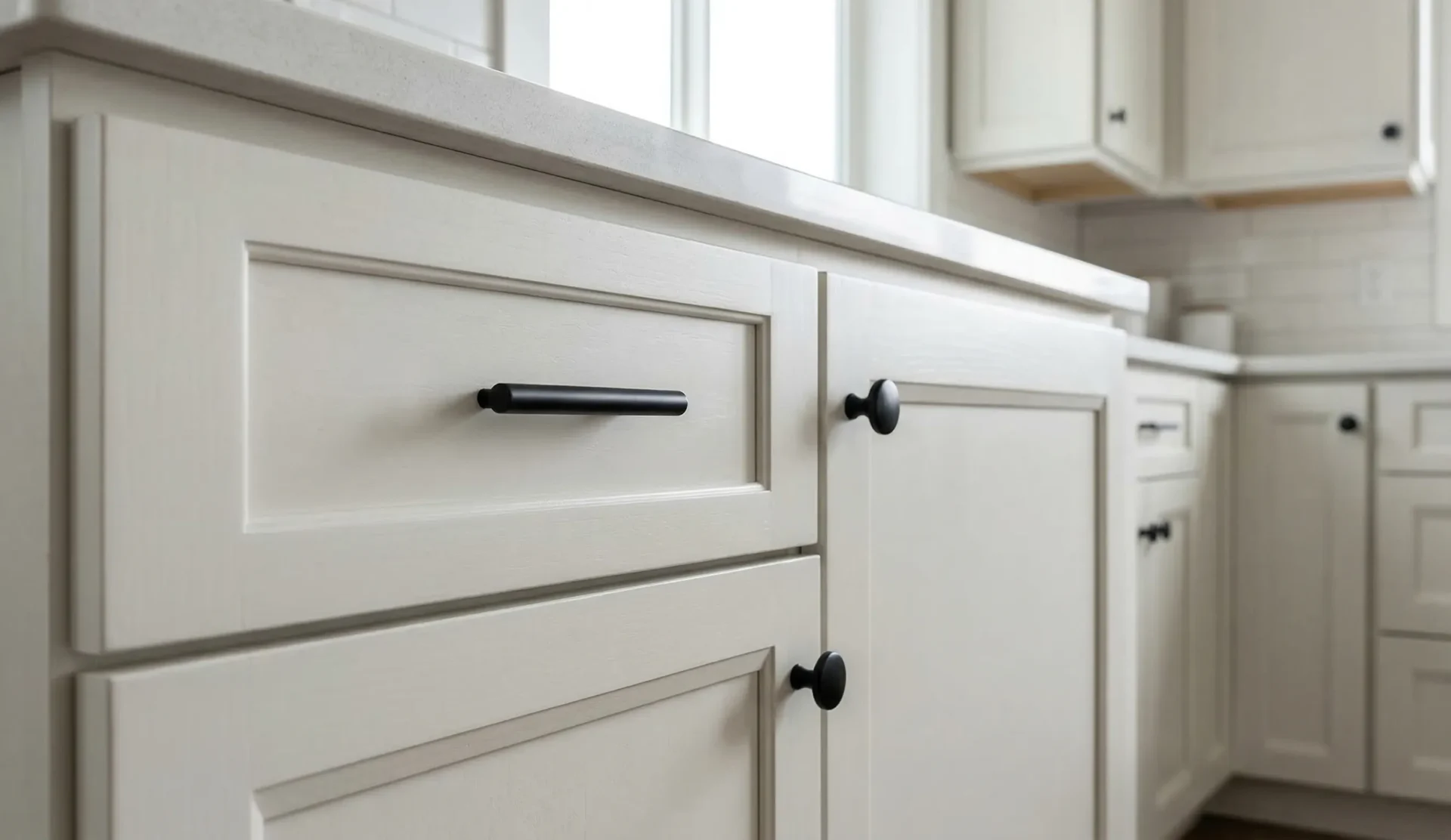
- Matte Black: For an industrial or ultra-modern vibe, matte black hardware on navy cabinets is a stealthy, sophisticated choice. It’s subtle and lets the cabinet color do the heavy lifting.
Countertop Coordination
Selecting the right countertop for navy cabinets is about deciding how much contrast you want. A crisp white quartz with subtle grey veining (like a Carrara look-alike) offers the highest contrast and looks the cleanest. This is the “tuxedo” look of kitchen design.
However, for a warmer feel, butcher block counters are making a massive comeback. The natural wood tones (walnut or white oak) warm up the cool navy paint. This combination is particularly effective on kitchen islands. You might choose quartz for the perimeter to handle the heavy cooking and water exposure, and use wood on the navy island to create a furniture-style look.
Flooring Considerations
Navy blue creates a heavy visual weight. To prevent the room from feeling bottom-heavy, your flooring choice is crucial. Light Oak or Blonde wide-plank flooring is currently the top choice. The lightness of the floor lifts the room, providing a steady base for the dark cabinets. Avoid dark espresso floors with navy cabinets unless you have 12-foot ceilings and massive windows; otherwise, the floor and cabinets will blend into a dark abyss.
Forest Green: The Organic Alternative
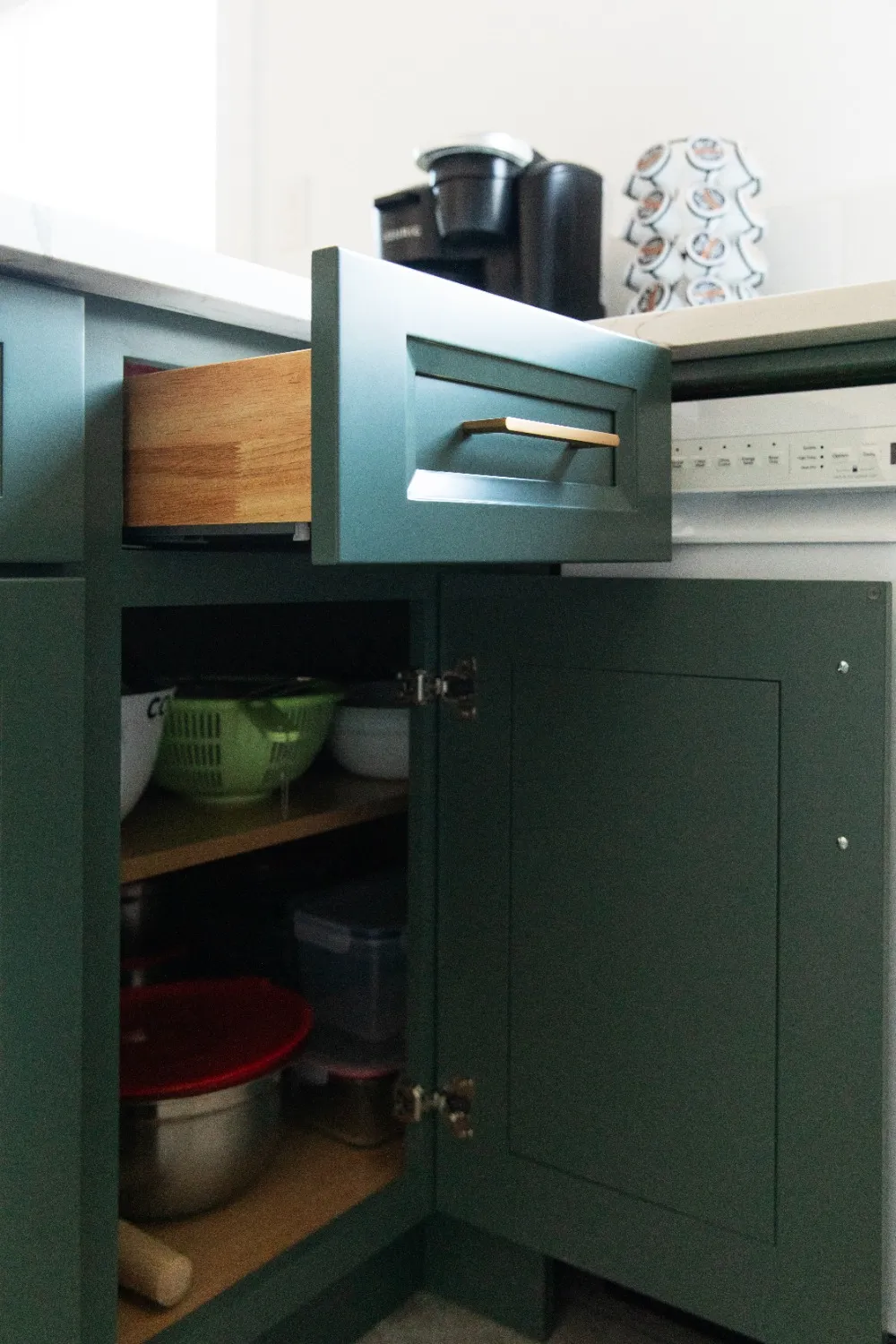
If Navy is the sophisticated suit, Forest Green is the comfortable, waxed canvas jacket. It is rugged yet refined. Forest green cabinetry brings a distinct personality that feels custom-made, even when utilizing cost-effective RTA options.
The Undertone Challenge
Green is the trickiest color to get right in manufacturing. If it leans too yellow, it looks like split pea soup; too blue, and it becomes teal. The ideal Forest Green for cabinetry is a deep, desaturated Hunter Green with grey undertones. This ensures the color remains stable under different lighting conditions. In the morning sun, it feels vibrant; at night, it reads almost black.
Material Mixology
Green screams for texture. While Navy looks great with polished surfaces, Forest Green thrives next to raw, tactile materials. Think about incorporating brick backsplashes, terracotta floor tiles, or exposed wooden beams. In an RTA kitchen renovation, you can achieve this by adding open wood shelving between upper cabinets or using a copper farmhouse sink. The copper patina against the deep green is a designer favorite that ages beautifully over time.
Wall Colors
What color do you paint the walls when the cabinets are green? You have two main distinct paths:
- Crisp White/Cream: This keeps the room airy and highlights the cabinetry as the main feature. It’s safe, bright, and effective.
- Color Drenching: This is a bold move where the walls are painted the same dark green as the cabinets (or a shade lighter). This creates a cozy, library-like atmosphere. It works exceptionally well in pantries, mudrooms, or smaller galley kitchens where you want to embrace the smallness rather than fight it.
Mastering the Two-Tone Layout
Committing to a full kitchen of dark color can be intimidating. This is where two-tone kitchen ideas come into play. This design strategy allows you to introduce bold colors like Navy or Forest Green without darkening the room excessively.
Classic Configurations
The Tuxedo: This is the most common two-tone layout. Dark colors on the base (lower) cabinets, and white or light grey on the upper cabinets. This works on a principle of visual gravity: darker items appear heavier, so keeping them near the floor grounds the space. The white uppers blend into the ceiling, making the room feel taller and more open.
The Island Accent: If you want to keep the main perimeter of your kitchen neutral (white or light wood), paint the island in Navy Blue or Forest Green. The island becomes a piece of statement furniture. This is the safest way to introduce color for resale value—it’s easy for a future buyer to repaint one island if they don’t like the color, compared to a whole kitchen.
The Focal Block: A newer trend involves a wall of tall cabinetry (pantry cabinets and fridge surrounds) painted in a dark color, while the rest of the kitchen remains light. This creates a vertical block of color that draws the eye and defines zones within an open-concept living space.
Bridging the Gap
The key to a successful two-tone kitchen is cohesion. You cannot simply have two different colored cabinets and hope they match. You need elements that tie them together. This is usually achieved through:
- Backsplash: A backsplash that contains tones of both the upper and lower cabinet colors.
- Countertops: Using the same countertop material on both the island and perimeter (waterfall edges work great here).
- Hardware: Keeping the hardware finish consistent across both colors to unify the design.
Durability and Technical Specifications in RTA
When buying colored cabinets, the finish is everything. With stained wood, scratches blend in. With painted opaque finishes, specifically dark ones, quality is paramount because imperfections show more easily. You need to look for durable painted finishes that can withstand the daily abuse of a kitchen environment.
The Painting Process
Not all RTA cabinets are created equal. Cheap cabinetry uses a single coat of paint over a primer. High-quality RTA cabinets, like those we offer, undergo a multi-stage process. This typically involves:
- Sanding and Prep: Ensuring the wood or MDF substrate is perfectly smooth.
- Primer: A heavy-duty bonding primer is applied.
- Paint Layers: Multiple coats of industrial-grade enamel.
- Catalyzed Conversion Varnish / UV Curing: This is the secret sauce. A clear topcoat or a hardening process that makes the paint resistant to chips, moisture, and oils from your hands.
MDF vs. Solid Wood for Painted Doors
There is a stigma against MDF (Medium Density Fiberboard), but for painted Navy or Green doors, it is actually superior to solid wood for the center panel. Solid wood expands and contracts with humidity changes. If you have a solid wood center panel painted navy blue, in the winter when the air is dry, the wood shrinks. This reveals a hairline crack of unpainted wood at the joints (known as “halo-ing”).
High-quality RTA painted cabinets often feature a solid hardwood frame (for structural rigidity and screw holding) with an HDF (High Density Fiberboard) center panel. The HDF is stable, does not expand, and provides a glass-smooth surface for the paint, ensuring that your navy or green finish remains flawless year-round.
Maintenance of Dark Finishes
Homeowners must be realistic: dark cabinets show fingerprints, dust, and water spots more than white cabinets. However, they hide scuffs and stains better. To maintain a durable painted finish, avoid abrasive sponges or harsh chemicals. A simple microfiber cloth with warm water and a mild dish soap is the best cleaning method. The factory-cured finish is tough, but it shouldn’t be scrubbed with steel wool.
Financial Analysis The Market Value
Renovating a kitchen is an investment. Homeowners often worry that choosing a bold color like Forest Green is a “risk” compared to a white kitchen. Let’s analyze the financial implications and ROI (Return on Investment) of choosing colored RTA cabinetry.
Cost Comparison: RTA vs. Custom
If you were to hire a custom cabinet maker to build and spray a Navy Blue kitchen, the cost would be astronomical. Custom paint jobs are labor-intensive. By choosing RTA cabinetry in these finishes, you are leveraging factory efficiency. You get the same designer look—a factory-baked finish that is often harder than a site-sprayed finish—for a fraction of the price.
| Cost Factor | Custom Shop (Site Finished) | 10% Cabinetry (Factory RTA) |
| Base Material Cost | High (Retail Lumber Pricing) | Low (Bulk Purchasing Power) |
| Finishing Labor | $3,000 – $6,000+ (Manual Spraying) | Included in Cabinet Price |
| Lead Time | 8 – 16 Weeks | 1 – 3 Weeks |
| Finish Consistency | Variable (Dependent on Painter) | Consistent (Automated Process) |
| Est. Total Cost (10×10 Kitchen) | $25,000 – $40,000+ | $3,500 – $6,500 |
Resale Value Trends
Real estate data suggests that homes with “high contrast” kitchens are selling at premiums. While white is safe, it is also forgettable. A kitchen with well-executed Navy or Green cabinets photographs better for listing sites (Zillow/Redfin) and sticks in the memory of potential buyers. The key is ensuring the rest of the kitchen (counters, floors) is neutral. A Navy kitchen with neutral counters is viewed as “Turn-Key Design” rather than “Someone else’s taste.”
The “Luxury” Perception
Dark colors are historically associated with luxury and heritage (think old libraries, members’ clubs, and estates). By installing Forest Green cabinetry, you are hacking the perceived value of the home. Visitors and buyers subconsciously associate these deep, saturated colors with higher expense and higher quality, even if the cabinets were an affordable RTA purchase.
The era of the sterilized, all-white kitchen is evolving. While white will always have a place, the warmth, sophistication, and personality of Navy Blue and Forest Green are here to stay. These colors allow homeowners to express themselves and create spaces that feel like home, rather than a showroom.
Implementing these colors requires attention to detail—balancing your lighting, selecting the right hardware, and ensuring you invest in quality manufacturing. However, the payoff is a stunning, high-end aesthetic that stands out in a sea of sameness.
At 10 Percent Cabinetry, we specialize in bridging the gap between custom looks and RTA pricing. Whether you are looking for the deep calm of navy blue kitchen cabinets or the organic richness of forest green, our collections are engineered for easy assembly and long-lasting beauty. Don’t settle for boring. Build a kitchen that makes a statement.
Ready to start your design journey? Explore our full range of durable painted finishes and RTA cabinets today.

10 Must-Have Ideas for a Dream Kitchen
Let’s be honest — the kitchen makes or breaks a home sale. And if you’re a builder juggling tight budgets, compressed timelines, and clients who’ve been scrolling Pinterest for six … Read more

Craftsman Shaker Cabinets: The Trending Kitchen Door Style
The Cabinet Door That’s Actually Worth the Hype Walk into any design showroom right now and you’ll notice something: the craftsman shaker cabinets are stealing the spotlight. Not because of aggressive marketing … Read more
How to Transform Your Upper Cabinets with a Grey Shaker RTA Glass-Door Upgrade – A Step-by-Step Tutorial
If you’ve been dreaming of a kitchen cabinet makeover but dreading the hefty price tag and weeks of disruption, there’s a smarter solution that’s transforming kitchens across America. Grey shaker … Read more