For decades, the general contractors and home builders of the United States operated under a binary assumption: you either paid a fortune for custom cabinetry to get quality, or you settled for big-box store “off-the-shelf” units that sacrificed durability for price. There wasn’t much of a middle ground. However, the construction landscape has shifted dramatically in the last ten years. Manufacturing precision has improved, logistics have become more streamlined, and the gap between “custom” and “RTA” (Ready to Assemble) has narrowed significantly.
For contractors, interior designers, and house flippers, understanding this shift is no longer optional—it is a financial necessity. Clients today have access to platforms like Pinterest and Houzz; they have high design expectations but often come to the table with unrealistic budgets. The challenge for the professional is bridging that gap. How do you deliver a magazine-quality kitchen without eating into your labor margins or presenting a quote that scares the homeowner away?
The answer lies in understanding the mechanics of the supply chain and the reality of materials. It requires a deep dive into the debate of ready to assemble vs custom cabinetry. This article will serve as a comprehensive guide for industry professionals and savvy homeowners, breaking down exactly how shifting to high-end RTA products can revolutionize project profitability and client satisfaction.
Analyzing the True Cost of Kitchen Cabinets
When we discuss the price of cabinetry, we aren’t just talking about the wood and the paint. We are talking about overhead, shipping, marketing, and labor. To understand why RTA offers such a distinct advantage, we have to look at where the money actually goes in a custom shop versus a large-scale manufacturer.
The Custom Shop Premium
In a traditional local custom shop, you are paying for the shop’s rent, the electricity, the high hourly wage of skilled craftsmen, and the inefficiency of building one kitchen at a time. While the craftsmanship is often undeniably good, the process cannot benefit from economies of scale. Every board cut is specific to that job. Every time the spray gun is loaded with lacquer, it is for that specific client. These “setup costs” are passed directly to the consumer. Furthermore, shipping fully assembled cabinets is expensive because you are essentially paying to ship air. A truck filled with assembled cabinet boxes is 80% empty space.
The RTA Efficiency Model
RTA cabinets flip this economic model. Because they are mass-produced in standard sizes (increments of 3 inches), the manufacturing cost per unit drops specifically due to volume. But the real savings—the game changer—is in logistics. Flat-packed cabinets take up a fraction of the space in a shipping container compared to assembled units. This drastically reduces the landed cost of the product. When you buy wholesale kitchen cabinets, you are paying for the materials and the engineering, not the air inside the box or the high rent of a local showroom.
For a contractor, this price difference is leverage. If you can decrease the material line item on a bid by 40% while maintaining quality, you have two choices: pass those savings to the client to win the bid, or retain that difference as profit margin for the assembly and installation labor. Most successful contractors do a mix of both.
| Cost Factor | Custom Cabinetry Shop | Premium RTA (10 Percent Cabinetry) |
| Manufacturing Basis | One-off production (High labor cost) | Mass production (Economies of scale) |
| Shipping Efficiency | Low (Shipping “Air”) | High (Flat-packed, dense shipping) |
| Average Lead Time | 8 to 16 Weeks | 1 to 2 Weeks |
| Cost per Linear Foot | $500 – $1,200+ | $150 – $400 |
Ultimately, the cost of kitchen cabinets is the single largest line item in a remodel. By controlling this cost without sacrificing the “bones” of the kitchen, you control the financial success of the entire project.
Deconstructing Quality: The “Contractor Grade” Myth vs. Reality
There is a pervasive myth in the industry that needs to be addressed immediately: the idea that RTA means “cheap.” This reputation comes from the 1990s and early 2000s when ready-to-assemble furniture was synonymous with particle board, cardboard backs, and plastic dowels that broke if you looked at them wrong. That is not what modern, premium RTA cabinetry is.
Defining the Materials
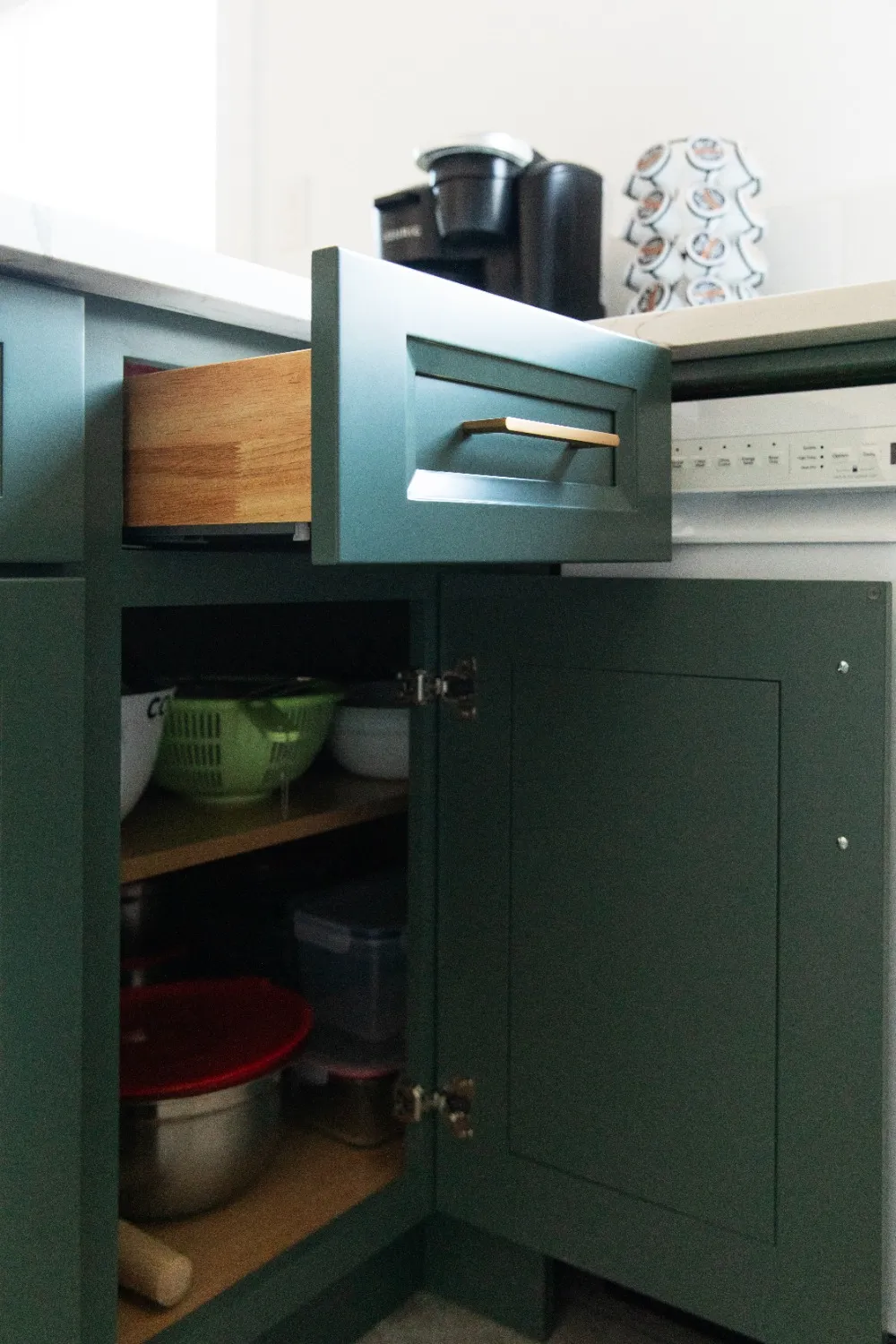
When we talk about high-quality RTA, we are discussing all-plywood construction. We are looking at Grade A plywood boxes—usually 1/2 inch or 5/8 inch thick. We are talking about solid wood face frames (often Maple or Birch) and solid wood doors. This is a far cry from the particle board or MDF (Medium Density Fiberboard) boxes found in stock cabinets at big-box home improvement stores.
In fact, many local “custom” cabinet makers actually use melamine or particle board for their cabinet boxes to save money, only using solid wood for the fronts. In this scenario, a premium RTA cabinet with a full plywood box is actually structurally superior to a locally made custom unit that uses composite materials.
Hardware Matters
The second component of quality is the hardware. A cabinet is only as good as its hinges and glides. Low-end contractor grade cabinetry often uses side-mounted epoxy glides that are noisy and only allow the drawer to open three-quarters of the way. Premium RTA lines, like those offered by 10 Percent Cabinetry, standardize on soft-close, under-mount glides and 6-way adjustable concealed hinges. These are the exact same specifications found in luxury custom kitchens.
For the contractor, this is a major selling point. When you can show a client a sample door that is solid wood, explain that the box is furniture-grade plywood, and demonstrate the soft-close action, the objection regarding “quality” vanishes. You are providing a specification sheet that rivals high-end brands for a fraction of the price. The term “Contractor Grade” used to mean “minimum viable product.” With modern RTA, it now means “commercial durability at a wholesale price.”
Time is Money – Lead Times and Project Flow
In the construction business, cash flow is king, and delays are the enemy. One of the most dangerous aspects of a kitchen remodel is the timeline uncertainty. If a custom cabinet shop tells you “8 weeks,” that can easily turn into 12 or 14 weeks due to a shortage of lumber, a broken CNC machine, or simply poor management. During those extra weeks, your job site is stagnant. You can’t install countertops. You can’t finish the plumbing. You can’t lay the backsplash. The project is dead in the water, but your overhead costs continue.
The Inventory Advantage
RTA cabinets are stock items. They are manufactured in massive runs and sit in warehouses ready to ship. When you place an order, you aren’t waiting for the wood to be cut; you are waiting for a forklift driver to put a pallet on a truck. This typically results in a lead time of 7 to 14 days.
The Ripple Effect on Scheduling
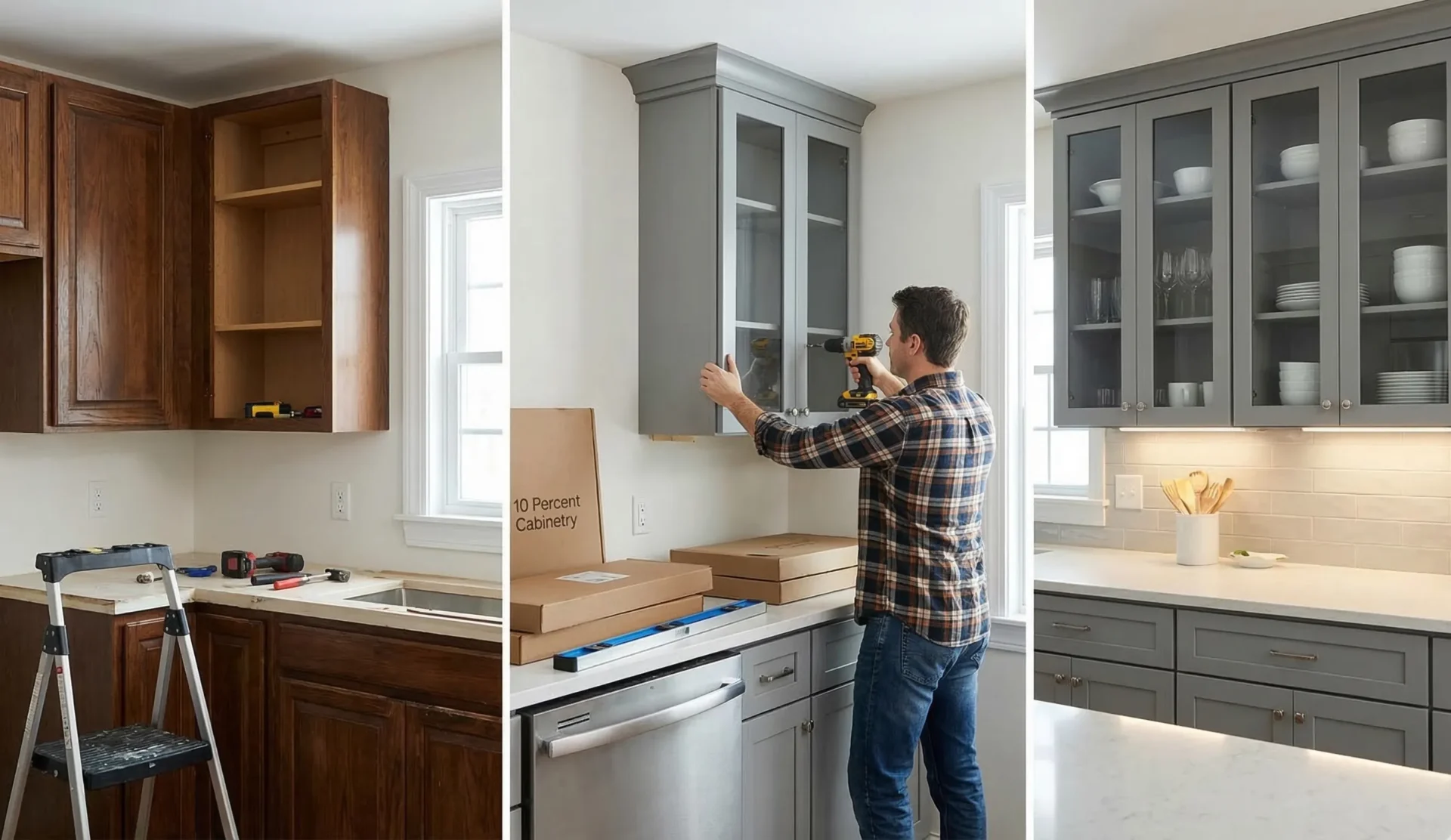
Imagine the difference in project management. With a 2-week lead time, you can demo a kitchen on Monday, place the cabinet order on Tuesday, and have the cabinets on-site by the time the drywall and rough-in plumbing are finished. This tight turnaround allows contractors to turn over projects faster. Completing a kitchen in 4 weeks instead of 12 weeks means you can take on three times as many jobs in a year. This volume capability is how small contracting businesses scale into large enterprises.
Furthermore, if a piece arrives damaged—which happens in construction—waiting on a replacement part from a custom shop can take weeks. With RTA, replacement parts are usually stock items that can be shipped out immediately, ensuring the punch list gets completed and you get your final check.
The Installation Reality: Labor vs. Convenience
Critics of RTA often point to the assembly time as a hidden cost. They argue, “Sure, the cabinets are cheaper, but you have to pay a guy to put them together.” This is a valid point that requires a nuanced breakdown. Yes, assembly requires labor, but does that labor cost outweigh the material savings? Almost never.
Assembly Economics
An experienced carpenter or laborer can assemble a standard RTA wall cabinet in about 10 to 15 minutes. A base cabinet with drawers might take 20 to 30 minutes. For a standard kitchen with 15 cabinets, you are looking at roughly one day of labor for one man to assemble the boxes. Even if you are paying a skilled rate, that cost is negligible compared to the thousands of dollars saved on the purchase price.
The “Flat Pack” Benefit on Site
There is also a logistical benefit to flat packs during the renovation process. Renovations often take place in tight spaces, older homes with narrow hallways, or high-rise condos with small elevators. Trying to maneuver a fully assembled 96-inch tall pantry cabinet into a basement apartment or up a winding staircase is a nightmare, often resulting in damage to the cabinet or the home’s walls.
With RTA, you carry flat boxes to the room where the kitchen is being installed. You assemble them in place. This reduces the risk of transport damage and makes the logistics of getting materials to the job site significantly easier. For the contractor, this means less fatigue for the crew and less time spent repairing drywall scratches caused by moving bulky furniture.
Creating a “Semi-Custom” Look
The biggest fear homeowners have regarding stock cabinetry is that it will look generic. They worry about “filler strips” looking ugly or the cabinets not fitting the wall perfectly. This is where the skill of the contractor combined with the versatility of wholesale kitchen cabinets creates magic. We call this the “Semi-Custom” approach.
Using Trim and Molding
You can take standard RTA boxes and elevate them using high-end trim. By utilizing scribe molding, crown molding, and light rail molding (which goes under the upper cabinets to hide lighting), you create a built-in furniture look. A standard box becomes a custom architectural feature when it is properly trimmed out.
Modifying Depth and Width
Experienced installers know that RTA cabinets can be modified. A 24-inch deep cabinet can be cut down to 18 inches to fit around a structural pillar. Two cabinets can be joined together to create a large island. By using “skins” (finished plywood panels) and filler pieces, you can close gaps seamlessly. A refrigerator can be boxed in with side panels and an overhead cabinet to give that integrated, high-end appearance that clients love.
The Mix and Match Strategy
Another trend is mixing RTA cabinets with custom elements. A contractor might use RTA for the perimeter of the kitchen to save budget, and then have a custom carpenter build a unique open-shelving unit or a specialized hood cover. This hybrid approach gives the client a unique design element while keeping the bulk of the project cost-effective. It effectively blurs the line between ready to assemble vs custom.
Market Trends: What US Homeowners Want
Finally, we must look at the market data. What adds value to a home in the USA right now? According to almost every real estate report, the kitchen remains the number one driver of home value. However, the return on investment (ROI) diminishes if you overspend. Putting a $100,000 custom kitchen into a $500,000 house does not make financial sense; you will never recoup that investment.
The Sweet Spot for ROI
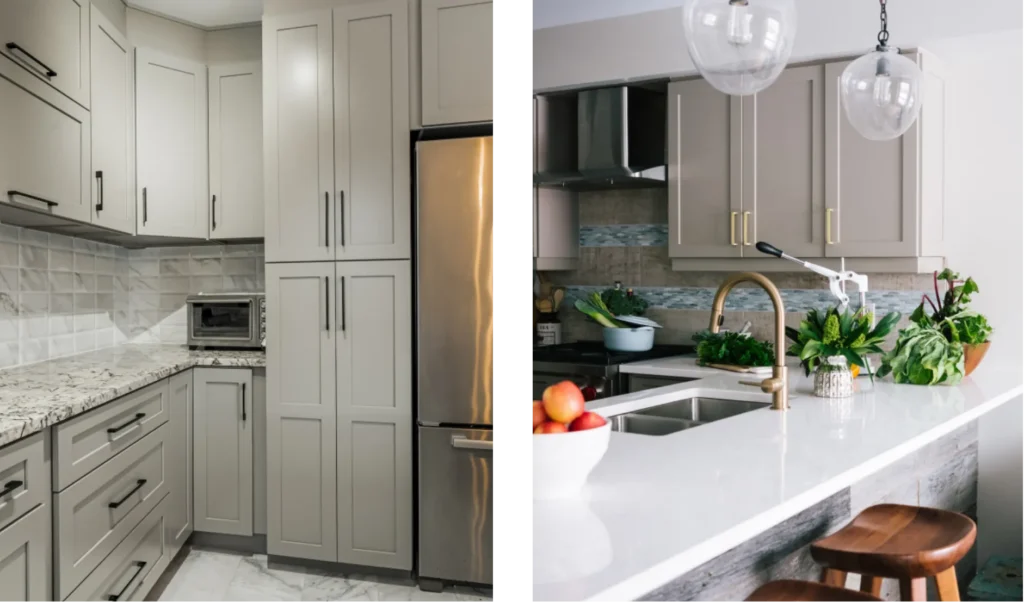
The highest ROI comes from kitchens that look premium but are installed at a moderate cost point. This is exactly the niche RTA fills. Trends in the US heavily favor Shaker style cabinets—usually in White, Grey, or Navy Blue. These are the standard stock colors for RTA manufacturers. By using these standard finishes, you are aligning exactly with what 80% of the market is demanding.
Budget Allocation
When you save money on the cabinet boxes by using RTA, you free up the budget for things the homeowner interacts with physically: the countertops and the appliances. A homeowner will appreciate a quartz countertop and a professional-grade range more than they will appreciate the fact that their cabinet box was built in a local shop versus a factory. As a contractor, guiding your client to spend their budget where it touches their daily life (surfaces and appliances) while using high-quality RTA for storage is the advice that wins referrals.
In the current housing market, where inventory is low and prices are high, buyers are scrutinizing finishes. A brand-new kitchen with soft-close doors and dovetail drawers sells a house. The buyer rarely asks if it was RTA or custom; they ask if it looks beautiful and functions well.
The debate is no longer about quality versus price; it is about efficiency versus tradition. For the modern contractor and the budget-conscious homeowner, premium RTA cabinetry offers a path to achieve luxury aesthetics without the luxury markup. By understanding the manufacturing benefits, the installation logistics, and the material quality of modern wholesale cabinets, you can deliver superior results.
At 10 Percent Cabinetry, we specialize in providing contractors and homeowners with materials that stand the test of time. Don’t let your next project get bogged down by long lead times and inflated custom pricing. Explore our selection today and see how the math works in your favor.

10 Must-Have Ideas for a Dream Kitchen
Let’s be honest — the kitchen makes or breaks a home sale. And if you’re a builder juggling tight budgets, compressed timelines, and clients who’ve been scrolling Pinterest for six … Read more

Craftsman Shaker Cabinets: The Trending Kitchen Door Style
The Cabinet Door That’s Actually Worth the Hype Walk into any design showroom right now and you’ll notice something: the craftsman shaker cabinets are stealing the spotlight. Not because of aggressive marketing … Read more
How to Transform Your Upper Cabinets with a Grey Shaker RTA Glass-Door Upgrade – A Step-by-Step Tutorial
If you’ve been dreaming of a kitchen cabinet makeover but dreading the hefty price tag and weeks of disruption, there’s a smarter solution that’s transforming kitchens across America. Grey shaker … Read more