
In an era dominated by sleek, ultra-minimalist interiors, a significant shift is occurring in the heart of the home. Homeowners are increasingly turning away from the clinical aesthetic of the early 2000s in favor of warmth, character, and a sense of history. The resurgence of retro-vintage cabinets is more than just a passing fad; it is a calculated embrace of craftsmanship and timeless appeal. By integrating nostalgic home decor with modern functionality, today’s kitchens are becoming vibrant spaces that tell a story rather than just serving a utility-focused purpose.
This revival is heavily influenced by mid-century modern kitchen trends, where bold colors, organic textures, and clean yet soft lines reign supreme. However, the movement isn’t purely about aesthetics. Modern consumers are prioritizing longevity and environmental impact, leading to a rise in sustainable kitchen design that values high-quality materials over disposable, flat-pack trends. In this guide, we will explore the defining characteristics of vintage-inspired cabinetry, how to balance heritage styles with 21st-century appliances, and why looking to the past is the smartest way to future-proof your home’s value and style.
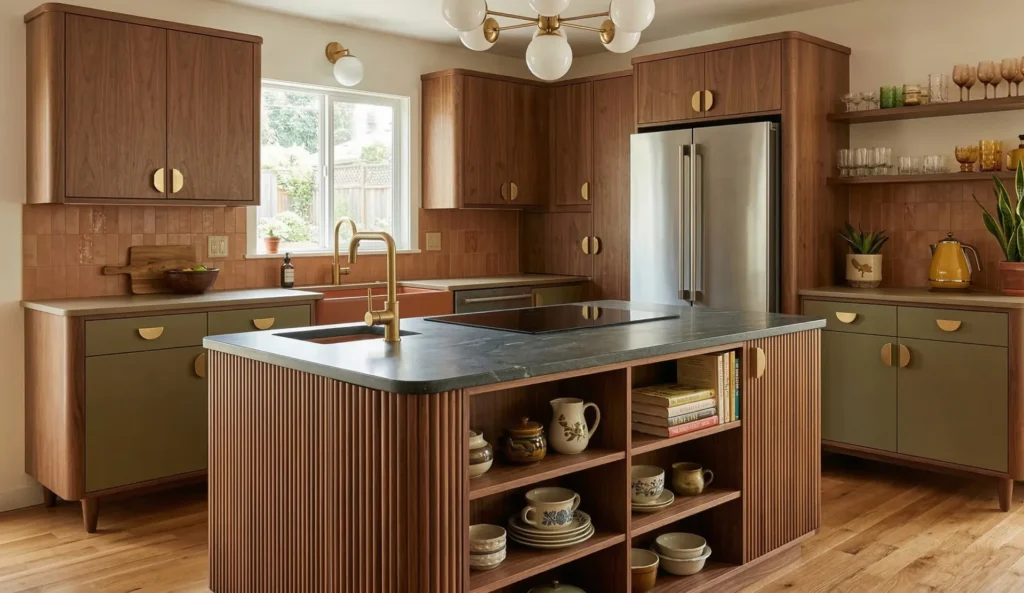
Table of Contents
The Emotional Pull of the Past: Why Retro is More Than a Fad
Walking into a kitchen designed with 1950s sensibilities is an immediate sensory experience. You are met with candy-coated mint greens, soft powder blues, and chrome accents that gleam with an optimism rarely found in modern catalog homes. Contrast this with the “modern farmhouse” craze of the last decade—dominated by white shiplap and matte black hardware—and the difference is stark. While the farmhouse aesthetic focused on a rustic, almost sterile purity, the resurgence of retro-vintage cabinets signals a return to warmth, personality, and daring color palettes.
This shift isn’t merely a fleeting trend or a niche obsession for antique collectors. It is a profound cultural statement on individuality. In an era of mass-produced, flat-pack furniture, homeowners are increasingly seeking “vintage-inspired cabinetry” that tells a story. We are witnessing a rejection of the “cookie-cutter” kitchen in favor of spaces that feel curated, lived-in, and deeply personal. At the company, we believe this movement is about reclaiming the heart of the home through designs that resonate on an emotional level.
The Fusion of Mid-Century Charm and Contemporary Utility
The modern obsession with mid-century modern kitchen trends isn’t about living in a museum. Instead, it is about the “fusion” of iconic silhouettes with 21st-century functionality. Today’s retro-vintage cabinets might look like they belong in a 1962 bungalow, but they hide soft-close hinges, pull-out spice racks, and heavy-duty materials that their predecessors lacked. This marriage of form and function is exactly what makes nostalgic home decor so enduring in the current market.
When you explore our gallery of custom installations, you can see how these bold choices create a focal point that modern minimalist designs often lack. By choosing vibrant hues or distinct wood grains, homeowners are able to ground their living spaces in a sense of history while enjoying the perks of modern engineering. The “past” is no longer a blueprint to be copied, but a wellspring of inspiration for a more colorful future.
- Emotional Connection: Retro designs evoke memories of family gatherings and a simpler, slower pace of life.
- Sustainable Longevity: High-quality, vintage-inspired pieces are built to last, aligning perfectly with the principles of sustainable kitchen design.
- Bold Expression: Moving away from neutral greys allows homeowners to showcase their unique personality through color and texture.
- Architectural Interest: Rounded edges and tapered legs provide a visual break from the sharp, industrial lines of modern architecture.
Why Nostalgia is the New Luxury
Psychologically, the home has become our ultimate sanctuary. In a world that feels increasingly digital and ephemeral, the tactile nature of retro-vintage cabinets provides a sense of permanence. There is a weight and a presence to these designs that thin, modern laminates cannot replicate. This “weight” is what many interior designers now refer to as the “new luxury”—the luxury of character over convenience.
“The most successful modern kitchens are those that refuse to be pinned down to a single decade. By integrating retro-vintage elements, you aren’t just decorating; you are layering history into your home, creating a space that feels both timeless and ahead of its time.”
Furthermore, the move toward sustainable kitchen design has bolstered this trend. Consumers are wary of “fast furniture” that ends up in landfills within five years. They are looking for craftsmanship that mirrors the durability of the mid-20th century. By investing in cabinetry that honors the past, they are choosing materials and styles that have already proven their aesthetic worth over seven decades, ensuring the kitchen remains stylish for thirty more.
Ultimately, the return of retro is a celebration of the human element in design. It is a reminder that the spaces we inhabit should make us feel something. Whether it is the playful curve of a cabinet handle or the rich grain of a walnut finish, these details matter. As we look closer at these designs, we begin to see how specific eras are influencing the way we cook, clean, and socialise today.
While the emotional pull of these designs is undeniable, the practical benefits of choosing retro styles are equally compelling as we look at the specific materials and finishes making a comeback.
A Brief History of Cabinetry: From Post-War Optimism to 90s Minimalism
To understand why we are currently witnessing a massive resurgence in retro-vintage cabinets, we must first look back at the post-war era. Following 1945, the kitchen transitioned from a purely utilitarian service room into the vibrant emotional heart of the home. This period was defined by a sense of boundless optimism, where homeowners embraced bold colors and innovative materials that reflected a bright, forward-looking future.
Mid-century modern kitchen trends introduced us to the concept of integrated storage and sleek, streamlined silhouettes. During the 1950s and 60s, cabinetry wasn’t just about function; it was a design statement. From the iconic pastel steel cabinets to the warm, tapered legs of wooden sideboards, the “Golden Age” of design focused on human-centric aesthetics and high-quality craftsmanship.
The Rise of Character: Oak Grains and Bold Brass Accents
As we moved into the 1970s and 80s, the design language shifted toward earthy textures and more substantial builds. This era celebrated the raw beauty of natural wood, particularly heavy oak grains that provided a sense of permanence and warmth. These vintage-inspired cabinetry choices were often paired with bold brass accents, creating a look that was both sophisticated and deeply inviting.
These decades prioritised tactile experiences, where the feel of a heavy cabinet door and the ornate detail of a brass pull were essential to the domestic experience. Homeowners valued nostalgic home decor that felt lived-in rather than sterile. This period solidified several hallmarks that are now making a comeback in modern luxury renovations:
- Warm Timber Tones: The move away from painted finishes toward rich honey and chestnut stains.
- Hardware with Personality: Oversized brass handles and intricate hinges that served as “jewelry” for the kitchen.
- Inset Door Styles: A focus on traditional joinery techniques that suggested artisanal quality.
- Scalloped Details: Softening the sharp lines of the kitchen with decorative curves and valances.
- Material Honesty: A preference for solid wood over the composite materials that would eventually dominate the market.
The Great Erasure: The 90s and the Minimalist Vacuum
By the time the 1990s arrived, the design pendulum swung aggressively toward minimalism. The warmth of the previous decades was replaced by “stark modernism,” characterized by flat-pack white melamine, hidden hardware, and a lack of visual texture. While this movement aimed for a clean look, it often resulted in kitchens that felt cold, clinical, and devoid of personality.
During this era, the industry lost much of the character that made the kitchen feel like a sanctuary. The focus shifted to mass production and cost-cutting, often at the expense of sustainable kitchen design. Traditional craftsmanship was sidelined in favor of “disposable” furniture, leading to a decade of interiors that lacked the soul of their mid-century predecessors.
Expert Perspective: “The current shift toward vintage styles is a direct reaction to the ‘grey-scale’ decade. Homeowners are no longer looking for a kitchen that looks like a lab; they want a space that tells a story through texture and history.”
What was lost during the minimalist years was the sense of “home.” Today, as we look through our design gallery, it is clear that the industry is reclaiming those lost elements. The textures that were once considered “dated”—like raised panels and polished brass—are being reinterpreted through a contemporary lens to create spaces that feel both fresh and familiar.
By blending the lessons of the past with modern technology, the company helps homeowners bridge the gap between historic charm and modern functionality. As we move forward, we are seeing that the most “innovative” designs are actually those that pay homage to the enduring quality of the mid-20th century. Having explored how these styles evolved and were temporarily sidelined, we can now examine why these specific elements are essential for a modern home.
Nostalgia Economics: The Cultural Drivers Behind the Comeback
The resurgence of retro-vintage cabinets is not merely a fleeting aesthetic whim; it is a calculated response to the socio-economic climate of the modern era. In an age characterized by rapid digital transformation and global uncertainty, the “nostalgia economy” has taken center stage. Homeowners are increasingly looking backward to find a sense of permanence and reliability that feels missing in the fast-paced, high-tech present.
Psychologically, the home has transitioned from being just a functional space to a sanctuary of emotional comfort. By integrating mid-century modern kitchen trends or 70s-inspired textures, individuals are reclaiming a sense of “home” that feels lived-in and storied. This shift is a direct rebellion against the sterile, clinical minimalism that dominated the previous decade.
The Social Media Catalyst and the Death of “Millennial Gray”
Platforms like Instagram, Pinterest, and TikTok have fundamentally altered how we perceive interior design. While mass-produced, “cookie-cutter” kitchens were once the standard for resale value, the digital landscape now rewards personality and uniqueness. Viral home tours often feature bold, vintage-inspired cabinetry that stands out against the sea of predictable, monochromatic renovations.
This social media amplification has empowered homeowners to take risks. For those seeking visual inspiration on how these styles translate to modern layouts, browsing a curated design gallery can reveal how past eras blend seamlessly with contemporary appliances. At the company, we have observed that the most shared and saved designs are those that tell a specific story rather than following a generic template.
The cultural driver here is “curated individualism.” People no longer want their kitchens to look like a showroom floor; they want them to reflect a collection of memories and timeless tastes. This has led to several key shifts in consumer behavior:
- Emotional Connection: Homeowners are choosing colors and wood grains that remind them of family gatherings or historical periods they admire.
- Sustainable Kitchen Design: There is a growing belief that “vintage” implies “built to last,” leading consumers toward high-quality materials rather than disposable, flat-pack options.
- Tactile Satisfaction: In a digital world, the feel of a solid wood cabinet or a heavy brass latch provides a grounding, physical experience.
- Nostalgic Home Decor: Integrating heirloom-style elements allows for a mix-and-match approach that accommodates both old-world charm and modern convenience.
The Search for “Comfort” in Design
Designers often refer to the “pendulum effect” in home styling. After years of cold whites and industrial grays, the collective consciousness is swinging back toward warmth and “cocooning.” Retro-vintage cabinets, with their soft edges, warm wood tones, and intricate molding, provide a literal and figurative softness to the kitchen environment.
Furthermore, the move toward sustainable kitchen design is deeply intertwined with this nostalgic revival. By opting for vintage-inspired cabinetry that utilizes durable hardwoods and classic joinery, homeowners are investing in pieces that are designed to survive the next fifty years, not just the next five. This longevity is a cornerstone of the nostalgia economy, where “value” is measured by durability and timelessness.
As we move away from the blandness of the 2010s, we are seeing a beautiful intersection of history and innovation. The drive for comfort and the influence of digital trends have created a market where the past is, quite literally, the future of the kitchen. This evolution naturally leads us to explore the specific design elements that define these iconic eras.
In the next section, we will break down the specific hallmarks of mid-century and retro aesthetics that you can implement in your own renovation.
Defining the 2026 Retro Aesthetic: Colors, Metals, and Textures
The contemporary interpretation of retro-vintage cabinetry is not a mere carbon copy of the 1950s or 70s. Instead, it is a curated “remix” that prioritizes warmth, character, and tactile quality. Modern homeowners are moving away from the clinical look of all-white kitchens in favor of a palette that feels lived-in and deeply personal.
In 2026, the “new retro” look is defined by a sophisticated balance between old-world charm and new-world precision. By focusing on specific color stories and material pairings, the company helps homeowners create spaces that feel both familiar and refreshingly unique. This section explores the specific elements that make this aesthetic work today.
The New Color Language: From Sage to Mustard
The foundation of the current retro-vintage cabinets trend is a palette rooted in “earthy nostalgia.” We are seeing a significant surge in sage green, muted mustard yellow, and deep terracotta. These shades provide a sense of organic calm while remaining bold enough to make a distinct stylistic statement.
Unlike the neon brightness of mid-century original designs, today’s iterations are desaturated and matte. This allows them to pair beautifully with natural wood grains, such as walnut or rift-sawn oak. These colors act as a bridge between the indoor environment and the natural world, a core tenet of sustainable kitchen design.
Mid-century modern kitchen trends often highlight these tones because they emphasize the clean, horizontal lines of the cabinetry. If you are looking for inspiration on how these colors translate into real-world applications, you can browse several completed projects in our portfolio gallery. Seeing these palettes in a functional layout often helps clarify the vision for a full remodel.
Mixed Metals and Textural Contrast
Texture plays a pivotal role in defining the 2026 vintage aesthetic. It isn’t just about how the surface looks, but how it feels under your hand. We are seeing a move toward “tactile nostalgia”—combining the smoothness of hand-painted doors with the ruggedness of unlacquered metals.
- Aged Brass: Provides a golden warmth that develops a unique patina over time, perfectly capturing the spirit of nostalgic home decor.
- Matte Black: Offers a sharp, modern counterpoint to curved retro silhouettes, grounding the design in the 21st century.
- Copper Accents: Often used in bridge faucets or hand-hammered hardware to introduce an artisanal, industrial-vintage vibe.
- Fluted Glass: Frequently used in upper cabinet inserts to add visual depth and a “Mad Men” era sophistication without cluttering the view.
Stealth Tech: The Modern Core within a Vintage Shell
Perhaps the most innovative aspect of vintage-inspired cabinetry is the concept of the “stealth kitchen.” While the exterior of the cabinets screams mid-century charm, the interiors are packed with high-end, contemporary engineering. Homeowners no longer have to sacrifice modern convenience for style.
High-tech induction cooktops, integrated refrigerators, and silent dishwashers are now hidden behind custom panels that match the retro-vintage cabinets perfectly. This allows the visual flow of the room to remain uninterrupted by cold stainless steel appliances. Inside the drawers, you will find soft-close hinges, motorized pull-out organizers, and integrated LED lighting.
This integration ensures that while the kitchen looks like a masterpiece from a previous decade, it performs with the efficiency required by a modern chef. By hiding the “tech,” the focus remains on the craftsmanship of the wood and the beauty of the design. This synergy of form and function is exactly why these styles are dominating the market this year.
Now that we have established the visual components of the modern retro look, we must look closer at the practical benefits that these designs bring to the modern household.
The Verdict: Why This Revival Works (And Where It Fails)
The resurgence of retro-vintage cabinets isn’t merely a fleeting trend driven by Pinterest boards or Instagram aesthetics. It represents a deeper, more visceral reaction against the sterile, clinical minimalism that dominated the last decade of interior design. Homeowners are increasingly seeking spaces that feel lived-in, curated, and emotionally resonant.
However, successfully integrating nostalgic home decor into a high-traffic environment like the kitchen requires a delicate touch. While the allure of a 1950s diner or a 1970s wood-paneled sanctuary is strong, there is a very real danger of crossing the line into “theme park” territory. The most successful modern kitchens find a middle ground where heritage meets high performance.
The Triumph of Emotional Resonance and Sustainability
Why does this revival work so well in the current market? Primarily because retro-vintage cabinets offer a sense of permanence and comfort. In an era of mass-produced, flat-pack furniture, the intricate details of mid-century modern kitchen trends or the robust silhouettes of Shaker-inspired designs feel authentic and high-quality.
Sustainable kitchen design also plays a massive role in this comeback. By choosing vintage-inspired cabinetry that utilizes durable materials and timeless construction methods, homeowners are rejecting the “fast furniture” cycle. When you invest in pieces that reference the past, you are often investing in a style that is less likely to look dated in five years compared to hyper-modern, experimental trends.
Furthermore, the warmth of vintage wood grains and the playfulness of retro pastel palettes allow for greater personalization. You can see how these elements come together to create unique, character-filled spaces by exploring the diverse projects in our online project gallery, where old-world charm meets modern engineering.
The Pitfalls: When Nostalgia Trumps Functionality
The revival fails when the designer prioritizes form over function to an extreme degree. Authentic retro-vintage cabinets from decades ago often lack the internal hardware we take for granted today. Narrow drawers, lack of soft-close hinges, and awkward corner reach-ins can quickly turn a beautiful kitchen into a frustrating daily experience.
There is also the risk of creating a “kitschy” space that lacks cohesion. If every element—from the appliances to the flooring—is a direct historical replica, the kitchen can feel claustrophobic and stuck in time. To avoid this, designers recommend the “80/20 rule,” where 80% of the kitchen is timeless and functional, while 20% lean heavily into those bold, retro accents.
- Poor Workflow: Many original mid-century layouts don’t accommodate the sheer number of modern small appliances we now use.
- Overwhelming Patterns: Relying too heavily on loud, vintage-inspired wallpapers or floor tiles can distract from the craftsmanship of the cabinetry.
- Maintenance Issues: True vintage wood finishes may not stand up to modern cleaning chemicals or heavy moisture without significant modern sealing.
- Lighting Gaps: Vintage aesthetics often relied on single overhead sources, which fail to provide the task lighting necessary for contemporary cooking.
Striking the Perfect Balance
To ensure your kitchen doesn’t become a museum piece, focus on “hybridization.” Use the silhouette of mid-century modern cabinetry but opt for modern, integrated storage solutions like pull-out larders and hidden charging stations. This approach honors the past while ensuring the kitchen remains the hardworking heart of the home.
Ultimately, the verdict is clear: the retro-vintage revival works when it is treated as an evolution, not just a carbon copy. By blending the soulful character of the past with the technological advancements of the present, you create a space that feels both familiar and refreshingly new.
With the design philosophy established, it’s time to look at the specific materials and finishes that bring these nostalgic visions to life.
Practical Tips: How to Ride the Vintage Wave Without Going Overboard
Embracing nostalgic home decor doesn’t mean your kitchen should look like a movie set from 1954. The most successful modern kitchens use retro-vintage cabinets as a focal point, balancing them with contemporary elements to create a space that feels curated rather than dated. Achieving this “new-old” harmony requires a strategic approach to materials, textures, and accents.
The goal is to evoke the warmth and character of the past while maintaining the high-performance functionality of a 21st-century workspace. By focusing on a few key areas, you can introduce vintage-inspired cabinetry without overwhelming your home’s existing architecture.
Start Small with “Jewelry” and Hardware
If you aren’t ready for a full-scale renovation, the easiest way to tap into mid-century modern kitchen trends is through hardware. Swapping out standard bar pulls for brass bin pulls, glass knobs, or wooden finger-pulls can instantly shift the era of your cabinetry. These small details act as the jewelry of the kitchen, providing a tactile connection to historical craftsmanship.
Consider the finish of your fixtures as well. While high-shine chrome was popular in the mid-century, aged brass or matte copper provides a softer, more sophisticated “lived-in” feel. These metals develop a patina over time, which aligns perfectly with the ethos of sustainable kitchen design by celebrating materials that age gracefully.
Master the Mix: Reclaimed Wood and Modern Stone
One of the most effective ways to ground vintage-inspired cabinetry is through a contrast of textures. A popular technique involves using reclaimed wood for a kitchen island or lower cabinets while topping them with sleek, white quartz or porcelain countertops. This juxtaposition prevents the wood from feeling too “rustic” and ensures the quartz doesn’t feel too clinical.
The natural grain of the wood provides visual warmth, while the stone offers a clean, non-porous surface for food preparation. For inspiration on how to combine these contrasting elements effectively, you can browse through our portfolio of completed kitchen renovations to see real-world examples of balanced design.
“The secret to a timeless kitchen lies in the 80/20 rule: keep 80% of your large-scale surfaces clean and neutral, then use the remaining 20% to showcase bold, retro-vintage cabinets or statement hardware that tells a story.”
Actionable Steps for a Curated Vintage Look
To ensure your kitchen stays on the right side of the “vintage vs. dated” line, follow these practical steps during your planning phase. These tips help you integrate character without sacrificing the modern conveniences you rely on daily.
- Choose One Era: Avoid mixing too many decades; if you love the sleek lines of the 1960s, don’t clutter the space with Victorian-style moldings.
- Integrated Appliances: Hide your modern dishwasher and refrigerator behind custom cabinet panels to keep the retro aesthetic uninterrupted.
- Neutral Backdrops: Use white subway tiles or simple plaster walls to allow your vintage-inspired cabinetry to be the undisputed star of the room.
- Open Shelving: Incorporate a few open shelves made of reclaimed timber to break up heavy blocks of cabinetry and display nostalgic stoneware.
- Smart Lighting: Pair your vintage cabinets with modern recessed lighting to ensure the workspace is bright, even if your aesthetic is moody and historical.
The Importance of Color Palette
Finally, consider your color story. While retro-vintage cabinets are often associated with bold teals or avocado greens, you can achieve a similar nostalgic effect with muted earth tones. Terracotta, sage green, and buttery creams are excellent choices that feel historical yet fresh. When these colors are applied to high-quality cabinetry, they create an atmosphere of comfort and permanence.
By blending these specific design choices, you create a kitchen that honors the past while serving the needs of the future. The result is a space that feels deeply personal and incredibly functional.
With your design strategy in place, the next step is understanding how these choices impact the long-term value and sustainability of your home.
Real-World Proof: Case Studies in Heritage-Inspired Remodels
While the aesthetic appeal of retro-vintage cabinets is undeniable, many homeowners wonder how these nostalgic styles function within a modern architectural framework. Seeing these designs in a showroom is one thing, but witnessing how they transform a lived-in space provides the ultimate inspiration. At the company, we have seen first-hand how heritage-inspired elements can breathe new life into diverse home styles.
By blending the charm of the past with the precision of contemporary manufacturing, we have helped clients achieve a balance that feels both curated and comfortable. Below are two distinct examples of how mid-century modern kitchen trends and vintage influences have been successfully integrated into real-world homes.
The Suburban Revival: Mid-Century Warmth in a 1950s Ranch
In this project, a family in a classic 1958 split-level home wanted to honor the original architecture without living in a museum. The dark, cramped original kitchen was replaced with expansive retro-vintage cabinets featuring a rich walnut grain and iconic tapered legs. This choice maintained the horizontal lines central to mid-century modern kitchen trends while offering the heavy-duty storage modern families require.
The result was a space that felt significantly larger and brighter. By opting for a minimalist hardware selection—specifically “finger-pull” grooves—the natural beauty of the wood became the focal point. This project serves as a prime example of sustainable kitchen design, as the high-quality materials were chosen for their longevity, ensuring the kitchen won’t need another overhaul for decades.
The Urban Loft: Industrial Meets Vintage Charm
Contrastingly, an urban loft project in a converted warehouse required a different approach. The high ceilings and exposed brick called for something bolder than traditional suburban styles. The solution was a suite of vintage-inspired cabinetry finished in a deep, matte navy blue, paired with reclaimed brass handles and open shelving made from salvaged timber.
This “industrial-vintage” fusion allowed the homeowners to incorporate nostalgic home decor, such as antique scales and copper cookware, without clashing with the building’s raw, modern bones. The cabinetry acted as a bridge between the 19th-century history of the building and the 21st-century lifestyle of its inhabitants. It proved that heritage designs aren’t limited to specific eras; they can be adapted to fit almost any interior environment.
Key Elements of a Successful Retro Transformation
When reviewing our most successful projects, several common threads emerge that ensure the design feels fresh rather than dated. If you are planning your own remodel, consider how these factors contributed to the success of the homes mentioned above:
- Material Authenticity: Using real wood veneers and solid hardware rather than synthetic imitations.
- Functional Modernization: Integrating soft-close hinges and pull-out organizers behind vintage-style facades.
- Balanced Color Palettes: Pairing bold “era” colors like avocado or teal with neutral backdrops to prevent visual overwhelm.
- Strategic Lighting: Utilizing under-cabinet LEDs to highlight the unique textures of vintage-inspired cabinetry.
- Cohesive Flow: Ensuring the kitchen’s retro vibe extends naturally into the dining or living areas.
Each of these case studies demonstrates that the return to heritage styles is driven by a desire for character and quality. If you want to see the full scope of what is possible with a nostalgic aesthetic, you can explore more detailed transformations in the company gallery.
With these real-world examples in mind, it is time to look at the practical side of bringing these styles into your own home.
The Future of Heritage Design: Is the Shift Permanent?
As we witness the resurgence of mid-century lines and Victorian-era craftsmanship, a vital question emerges: is this a fleeting moment of nostalgia, or a permanent pivot in how we conceive our living spaces? For many interior experts, the consensus is clear. We are no longer just looking at a trend; we are witnessing the birth of “future-vintage” hybrids.
The modern homeowner is increasingly disillusioned with the “fast furniture” culture that dominated the early 2000s. Instead, there is a profound shift toward retro-vintage cabinets that offer both visual character and generational durability. This movement suggests that the future of kitchen style isn’t about chasing the newest neon light or high-gloss finish, but about perfecting the timeless elements of the past with today’s engineering.
The Rise of the “Future-Vintage” Hybrid
What defines a future-vintage kitchen? It is the seamless integration of 21st-century convenience with 1950s or 1960s aesthetics. Imagine a kitchen featuring sleek, walnut mid-century modern kitchen trends—tapered legs and minimalist hardware—but hidden behind those doors are soft-close dampers, pull-out spice racks, and integrated wireless charging stations.
This hybrid approach allows homeowners to enjoy the warmth of nostalgic home decor without sacrificing the efficiency required by a modern, busy lifestyle. By combining the soul of heritage design with the precision of contemporary manufacturing, the company ensures that your kitchen remains relevant for decades, not just a single season.
“The most sustainable kitchen you can build is the one you never want to tear down. Heritage design succeeds because it provides an emotional anchor in a fast-paced digital world, blending the tactile beauty of wood with the reliability of modern hardware.”
Why Sustainability and Heritage Go Hand-in-Hand
One of the primary drivers behind the permanence of this shift is the global focus on sustainable kitchen design. Retro-vintage styles prioritize natural materials—hardwoods, stone, and brass—which age gracefully rather than ending up in a landfill after five years of wear. When you invest in high-quality vintage-inspired cabinetry, you are making an ecological choice as much as an aesthetic one.
Furthermore, the “lived-in” look of heritage kitchens accommodates the natural patina of life. A small scratch on a hand-stained oak cabinet adds character, whereas a chip in a laminate door often necessitates a full replacement. This resilience is what makes these designs a staple of the “future” kitchen.
- Material Integrity: A return to solid wood frames and dovetail joinery that withstand humidity and heavy use.
- Adaptive Aesthetics: Retro designs that can be easily refreshed with new hardware or paint colors as personal tastes evolve.
- Emotional Connection: Creating a “hearth” atmosphere that encourages family gathering rather than just food preparation.
- Value Retention: Homes with classic, high-end cabinetry often see a higher return on investment compared to those with ultra-trendy, niche finishes.
Join the Heritage Design Movement
Are you ready to blend the best of the past with the innovations of tomorrow? Whether you are restoring a historic home or looking to add some soul to a new build, your journey starts with a clear plan. We invite you to download our exclusive “Heritage Design Checklist” to help you navigate your renovation with confidence.
We also love seeing how you bring these concepts to life. If you’ve recently completed a project using our vintage-inspired cabinetry, share your photos on Instagram using the hashtag #MyHeritageKitchen for a chance to be featured in our monthly design spotlight. Let’s build a future that respects the beauty of the past together.
With the foundations of future-vintage design established, we can now look at how to maintain these stunning spaces for the long term.
Embracing the Timeless Appeal of Retro Kitchens
The resurgence of retro-vintage cabinets proves that great design never truly goes out of style; it simply evolves. By integrating the bold aesthetics of the past with the high-performance materials of today, homeowners can create a space that feels both nostalgic and cutting-edge. This design movement prioritizes personality and craftsmanship, ensuring your kitchen remains a unique, soulful heart of the home for decades to come.
Whether you are drawn to the vibrant hues of the 1950s or the sleek, organic lines found in current mid-century modern kitchen trends, there is a vintage-inspired look to suit every architectural style. These designs offer a refreshing alternative to minimalist “cookie-cutter” interiors, providing a perfect balance of warmth, functionality, and historical charm that stands the test of time.
Ready to transform your culinary space with the perfect blend of heritage and innovation? At the company, we specialize in bringing these iconic looks to life with premium quality and expert craftsmanship. Contact us today to explore our exclusive collection of retro-vintage cabinets or schedule a design consultation to start your kitchen renovation journey.