
Why Your Choice of Flooring Dictates the Entire Vibe of Your 2026 Renovation
Walk into a room and look down. Most people don’t realize it, but the surface beneath your feet does about 70% of the heavy lifting when it comes to the visual weight of a home. For years, we were stuck in a cycle of “safe” choices—sterile grays, uniform tiles, and carpets that felt more like an afterthought than a design statement. But as we move deeper into the year, the team at 10 Percent Cabinetry has noticed a massive shift in how homeowners approach their foundations. We aren’t just looking for something to walk on anymore; we’re looking for a material that tells a story, grounds the architecture, and maybe most importantly, survives the chaos of actual life without looking like a disaster zone three years later.
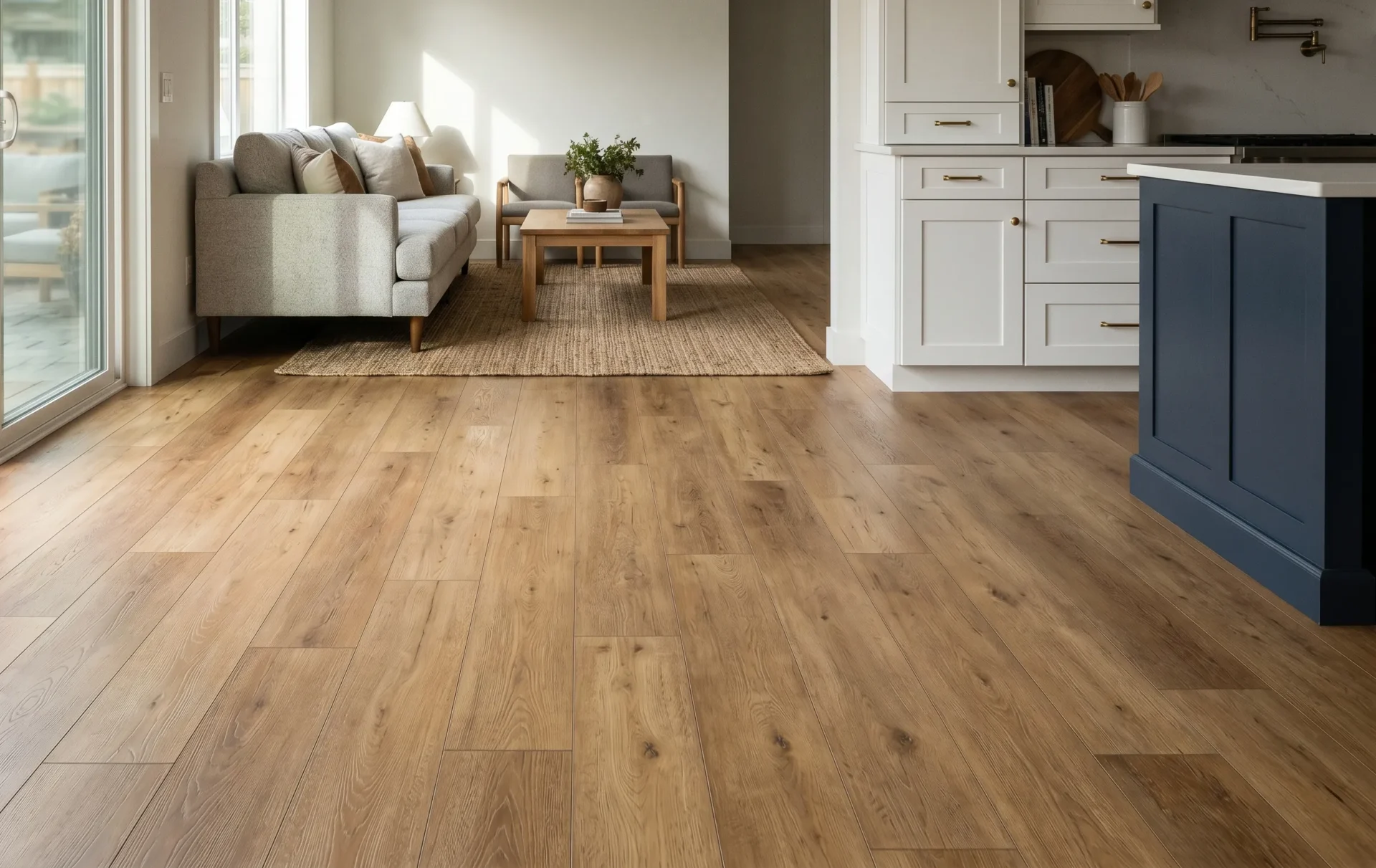
The conversation around 2026 flooring trends has moved past the binary choice of “carpet or hardwood.” Today, the savvy homeowner is looking at the intersection of high-tech durability and low-impact environmental sourcing. Think about it: when you invest in high-end kitchen cabinets or a custom bathroom vanity, the flooring is the backdrop that either makes those features pop or makes them look completely out of place. If you pair a rich, dark walnut cabinet with a cold, blue-toned tile, the room feels disjointed. But match it with a warm, textured plank? Suddenly, the whole space feels like a cohesive retreat. It’s about creating harmony, and 10 Percent Cabinetry is seeing a surge in people wanting their floors to feel “lived-in” from day one.
One of the biggest drivers of this change is our collective move toward “warm minimalism.” The cold, museum-like aesthetics of the past decade are officially on their way out. In their place? Earthy tones, organic textures, and materials that invite you to kick off your shoes. We’re seeing a renewed interest in hardwood floor styles 2026 that lean into the natural imperfections of wood rather than trying to sand them into oblivion. Knots, mineral streaks, and varied grain patterns are no longer seen as “defects”—they’re the highlights. This shift toward the “perfectly imperfect” is a direct reflection of how we want our homes to function: as sanctuaries, not just showpieces.
But let’s get real for a second—a floor can be beautiful, but if it can’t handle a spilled glass of red wine or a muddy golden retriever, it’s a failure. That’s why 10 Percent Cabinetry spends so much time helping clients navigate the technical specs of modern materials. You need to know how a finish will hold up under UV light and whether the core of your plank is going to swell the first time the dishwasher leaks. The kitchen flooring ideas we’re pushing this year aren’t just about what looks good on Instagram; they’re about what stays looking good after five years of heavy foot traffic. We’re seeing a fascinating blend of old-school craftsmanship and new-age engineering that allows us to have the best of both worlds: the soul of natural wood with the resilience of a laboratory-tested surface.
There’s also a psychological component to this. After years of spending more time at home, we’ve become hyper-aware of how our surroundings affect our mood. A floor that feels hard and cold underfoot can actually make a room feel less welcoming, regardless of how many throw pillows you toss on the sofa. By focusing on sustainable flooring and tactile surfaces, we’re effectively “softening” our living spaces. This isn’t just a trend; it’s a fundamental change in residential design philosophy. Whether you’re eyeing a full gut-reno or just a quick refresh, understanding these shifts is the difference between a home that feels dated in two years and one that feels timeless for twenty.
The Evolution of Material: Beyond the Surface of 2026 Flooring
If you haven’t looked at flooring samples in the last five years, you’re in for a massive surprise. The industry has evolved at breakneck speed, particularly in the realm of synthetic and engineered materials. At 10 Percent Cabinetry, we often talk to clients who are hesitant about anything that isn’t solid hardwood. They remember the “plastic-looking” floors of the early 2000s that clicked and clacked when you walked on them. Here’s the thing: that era is dead. Modern luxury vinyl planks are so visually and texturally accurate that even some contractors have to get down on their hands and knees to tell the difference.
The Rise of Ultra-Realistic Luxury Vinyl Plank (LVP)
LVP has dominated the market for a reason. It’s the ultimate problem-solver for the modern home. In 2026, the “luxury” in luxury vinyl plank isn’t just marketing fluff. Manufacturers are now using high-definition digital printing and deep-embossing techniques that align the texture of the plank with the visual grain of the wood. If you see a knot in the print, you can actually feel the indentation of that knot with your finger. This tactile depth is what moves the needle from “fake wood” to “authentic alternative.” For high-moisture areas like kitchens and mudrooms—where 10 Percent Cabinetry does most of its work—this material is a godsend. It’s 100% waterproof, meaning you can have that continuous wood-look flow from your living room straight into your kitchen without worrying about water damage at the sink.
Sustainable Roots: Bamboo and Reclaimed Wood
Sustainability is no longer a niche requirement; for many of our clients at 10 Percent Cabinetry, it’s a non-negotiable. But what does “green” actually mean in 2026? It means looking at the lifecycle of the product. Sustainable flooring materials like bamboo have made a huge comeback, but not the cheap, flimsy stuff from twenty years ago. We’re talking about strand-woven bamboo that is incredibly dense and harder than most traditional hardwoods. Then there’s reclaimed wood. There is something undeniably soulful about using flooring that was salvaged from an old barn or a shuttered factory. It carries a history that new lumber simply cannot replicate. Beyond the “cool factor,” using reclaimed materials reduces the demand for new logging and keeps perfectly good timber out of landfills. It’s a win-win for the environment and your home’s aesthetic.
The Engineering Marvel of Modern Wood
While solid hardwood will always have its devotees, the real hero of the 2026 design world is engineered wood. Why? Because it’s built to survive the fluctuating humidity levels that drive solid wood crazy. 10 Percent Cabinetry often recommends this for homes in climates where the seasons swing from humid summers to dry winters. By layering a real hardwood veneer over a cross-laminated core, you get the exact look and feel of solid oak or maple, but with a structural stability that prevents gapping and crowning. It’s the smart person’s way to get a high-end look without the high-end maintenance headaches. Plus, the ability to use wider planks—which are very much in style right now—is much easier with an engineered product because it won’t warp like a solid 8-inch wide board would.
Textural Depth and Tonal Shifts: Creating a Multi-Sensory Experience
Choosing a floor color is usually where people start, but at 10 Percent Cabinetry, we argue that texture is just as important as the hue. In 2026, we are seeing a massive departure from the ultra-smooth, high-gloss finishes that once defined “luxury.” Today, luxury is defined by how a surface interacts with light and touch. When you have a flat, shiny floor, every speck of dust and every dog hair is highlighted as if it’s under a spotlight. It’s exhausting to keep up with. The new flooring trends 2026 (and into the future) are all about finishes that hide the “evidence of life” while adding character to the room.
The Magic of Wire-Brushed and Hand-Scraped Finishes
Textured surfaces like wire-brushed or hand-scraped finishes are gaining traction for more than just their looks. Wire-brushing pulls out the soft fibers of the wood, leaving the harder grain exposed. This creates a subtle, matte texture that feels incredible underfoot and is remarkably good at masking scratches from pets or furniture. Hand-scraped finishes go a step further, offering a more rustic, artisanal look that mimics the way floors were finished before industrial sanders existed. For a busy household, these textures are a practical dream. 10 Percent Cabinetry often suggests these for open-concept layouts where the kitchen, dining, and living areas all share the same floor. The texture helps define the space and adds a layer of warmth that flat surfaces lack.
Earthy Tones: Moving Away from the “Grey-out”
Let’s talk color. If the last decade was the era of “Cool Grey Everything,” 2026 is the year of the “Warm Hug.” We are seeing homeowners gravitate toward soft beiges, honey-toned oaks, and deep, rich browns. These colors bring a sense of stability and calm to a home. When you pair these warmer tones with the right cabinetry—something 10 Percent Cabinetry specializes in—you create a space that feels timeless. A light, warm oak floor can make a small room feel twice as large and significantly brighter, reflecting natural light without the harsh glare of a white tile. On the other end of the spectrum, deep chocolates and charcoals are being used in bedrooms and dens to create “moody” sanctuaries that feel expensive and cozy.
Pattern Play: Herringbone and Wide Planks
The “how” of installation is changing just as much as the “what.” While standard staggered planks are still the go-to for many, we’re seeing a resurgence in classic patterns. Herringbone and chevron layouts are no longer reserved for Parisian apartments or historic mansions. Using engineered wood flooring in a herringbone pattern in an entryway or a primary bath adds a level of architectural detail that “elevates” the entire house. It’s an easy way to make a space look custom and high-end without changing the actual square footage. Meanwhile, in larger rooms, the trend is “the wider, the better.” Wide-plank floors (7 inches or more) reduce the number of seams in a room, creating a cleaner, less cluttered look that allows the natural beauty of the wood grain to take center stage. At 10 Percent Cabinetry, we find that wider planks often make a modern home feel more grounded and substantial, providing a solid anchor for even the most contemporary design choices.
Ultimately, the benefit of these trends isn’t just about following what’s “in.” It’s about utilizing the advancements in manufacturing to create a home that is easier to live in, more beautiful to look at, and more valuable in the long run. When you choose a floor that combines a luxury vinyl durability with a timeless aesthetic, you’re not just renovating; you’re future-proofing your lifestyle. And that’s exactly what we aim for with every project at 10 Percent Cabinetry.
Putting Trends into Practice: A Room-by-Room Strategy
Understanding the theoretical side of 2026 flooring trends is one thing, but actually living with them is quite another. When we talk to homeowners at 10 Percent Cabinetry, the biggest hurdle isn’t usually picking a color—it’s figuring out how that color survives a spilled glass of red wine or a muddy golden retriever. If you’re planning a renovation, you need to stop thinking about floors as a flat surface and start thinking about them as the hardest-working “furniture” in your home.
The Kitchen: Where Durability Meets Design
The kitchen is the undisputed heart of the home, but it’s also a high-stress environment for flooring. Moisture, heat, and heavy foot traffic mean your kitchen flooring ideas need to be rooted in resilience. This is where luxury vinyl planks (LVP) have truly taken over the market. But here’s the trick most designers won’t tell you: it’s all about the “wear layer.” If you’re installing LVP in a kitchen, don’t settle for anything less than a 20-mil wear layer. It’s the difference between a floor that looks scratched in three years and one that looks pristine for a decade.
At 10 Percent Cabinetry, we often recommend pairing wide-plank LVP in a warm honey oak with white or navy cabinetry. The contrast is striking, and because modern LVP has such a convincing texture, you get that high-end “European White Oak” look without the constant fear of water damage near the dishwasher. And let’s be honest? Nobody wants to spend their Saturday morning oiling hardwood floors in a high-traffic zone.
The Living Room: Creating the “Grand Anchor”
In the living or dining room, you have more freedom to play with hardwood floor styles 2026. One of the most effective ways to make a standard-sized room feel like a custom estate is to play with the layout. We are seeing a massive resurgence in herringbone patterns. While it requires more labor and a slightly higher waste percentage during installation, the visual payoff is immense. It creates a sense of movement and architectural intent that straight planks simply can’t match.
If you’re going for a more modern, “quiet luxury” aesthetic, look toward wide-plank flooring. Planks that are 7 inches or wider minimize the number of seams on your floor, which trick the eye into seeing more space. It’s a clean, expansive look that feels grounded. Just remember that wider planks can be more prone to gapping if your home’s humidity isn’t controlled—something a professional from 10 Percent Cabinetry can help you navigate during the planning phase.
Mixing Materials Without Creating a Mess
One of the hardest things to get right is the transition. If you have sustainable flooring materials like bamboo in the hallway and tile in the bathroom, how do they meet? The 2026 trend is moving away from those chunky, trip-hazard T-molding strips. Instead, we’re seeing “flush transitions.” This involves precision-cutting the materials so they sit at the exact same height, separated only by a thin bead of color-matched caulk. It sounds like a small detail, but it’s exactly the kind of nuance that separates a DIY job from a professional-grade renovation. It makes the entire home feel like a cohesive thought rather than a series of disconnected rooms.
The Expert’s Perspective: What’s Really Moving the Needle?
If you ask a big-box retailer what’s trending, they’ll show you what they have the most of in stock. But if you ask the experts at 10 Percent Cabinetry, you’ll get a different story. The “bigger picture” for 2026 flooring trends isn’t just about a color palette; it’s a fundamental shift in how we value the longevity of our materials. For the last ten years, we were stuck in the “gray-everything” era. It was safe, it was neutral, and frankly, it was a bit boring. We’re finally seeing the pendulum swing back toward authenticity.
The Myth of “Waterproof” Wood
Here is something most guides skip over: the word “waterproof” is often used loosely in marketing. While many luxury vinyl plank options are truly waterproof, some “water-resistant” laminates are being sold as if they can handle a flooded basement. They can’t. If you live in a coastal area or a place with high humidity, your material choice needs to be based on the local climate, not just a Pinterest board. At 10 Percent Cabinetry, we’ve seen homeowners insist on solid hardwood in humid climates only to see the boards cup within a year. In those cases, engineered wood flooring is the superior choice—it offers the real wood top layer but a stable core that handles moisture fluctuations like a pro.
The Real Cost of “Cheap” Flooring
We see it all the time: a homeowner finds a “deal” on flooring for $1.99 a square foot. It looks good in the box, but once it’s laid down, the repetition of the pattern (the “repeat rate”) is so frequent that the floor looks fake and pixelated. High-quality flooring trends 2026 and beyond are focusing on unique grain patterns. Better LVP and laminate products will have 10 to 15 unique plank designs before you see a repeat. Cheaper ones might only have four. If you don’t want your floor to look like a giant sheet of contact paper, you have to look at the tech behind the print. This is why 10 Percent Cabinetry prioritizes manufacturers that invest in high-definition digital printing and deep embossing.
Sustainability is No Longer a Niche
A few years ago, sustainable flooring materials were something you only found in high-end eco-boutiques. Today, it’s a primary driver for the average renovation. People are increasingly concerned about VOCs (Volatile Organic Compounds) and off-gassing. They want to know that the floor their kids are crawling on isn’t leaching chemicals into the air. We’re seeing a massive uptick in the use of cork and FSC-certified hardwoods. These materials don’t just “feel” better for the environment; they add a layer of story and soul to the home. When you can tell a guest that your flooring was reclaimed from an old barn or harvested from a renewable cork forest, it adds a level of character that no mass-produced plastic floor can mimic.
Conclusion: Building Your Foundation with Confidence
Choosing a new floor is probably one of the most high-stakes decisions you’ll make for your home. Unlike a coat of paint or a new set of curtains, you can’t easily swap out 1,000 square feet of flooring if you realize you don’t like it three months later. That’s why the 2026 flooring trends we’ve discussed—the move toward warmth, the embrace of texture, and the prioritisation of sustainable flooring—are so vital. They aren’t just “fads” that will disappear by next Christmas; they represent a return to classic, comfortable design principles.
Whether you are leaning toward the rugged durability of luxury vinyl plank for your busy household or you’re ready to invest in the timeless elegance of hardwood floor styles 2026, the key is balance. Your floors should serve as a neutral, high-quality canvas that allows your furniture and cabinetry to shine. At 10 Percent Cabinetry, we believe that a great floor is one you don’t have to think about every day because it just works. It stays quiet, it stays clean, and it stays beautiful regardless of what life throws at it.
If you’re feeling overwhelmed by the sheer number of kitchen flooring ideas out there, take a breath. Start with your lifestyle first. Do you have pets? Do you cook every night? Do you hate the sound of “click-clack” heels on a hard surface? Answering these practical questions will narrow down your material choices much faster than staring at color swatches will. Once you have the material figured out, then you can let the aesthetics of the 2026 flooring trends guide your color and texture choices.
Ultimately, your home should be a reflection of your personality. If you love the look of engineered wood flooring with a matte, wire-brushed finish because it feels organic and grounded, go for it. If you want the ultra-clean, modern look of large-format tiles, make it happen. The team at 10 Percent Cabinetry is here to ensure that whatever direction you choose, the execution is flawless and the materials are built to last. Don’t just follow a trend—use these trends to build a space that feels like home for the next twenty years. Your future self (and your resale value) will thank you.